
A stainless steel tumbler looks simple from the outside: an inner cup, an outer shell, a lid and perhaps a colored coating.
The part that does most of the insulating work is hidden between the two stainless steel walls.
That space is evacuated to create a low-pressure cavity—a near-vacuum—which greatly slows the transfer of heat between the beverage and the surrounding environment.
But a vacuum does not magically stop all heat.
To understand vacuum insulation in stainless steel tumblers, it helps to look at the three ways heat normally moves: conduction, convection and radiation.
Heat Naturally Moves From Warmer to Cooler
When hot coffee is poured into a tumbler in a cool room, thermal energy gradually moves from the coffee toward the cooler surroundings.
With ice water on a hot day, the opposite happens: heat from the surroundings moves toward the colder drink.
An insulated tumbler cannot stop that process completely.
Its job is to slow it down.
Heat moves mainly through three mechanisms:
- Conduction — heat moving through physical matter
- Convection — heat carried by moving liquids or gases
- Radiation — heat transferred as electromagnetic energy
Vacuum insulation is effective because it greatly reduces two of these mechanisms across the space between the cup walls, while other design features can help control the third.
Conduction: Heat Moving Through Material
Conduction happens when heat passes through matter by direct molecular interaction.
Metal is a relatively good conductor compared with still air, which is why a single-wall stainless steel cup changes temperature fairly quickly.
A vacuum tumbler uses two separate stainless steel walls:
Beverage → inner stainless steel wall → vacuum space → outer stainless steel wall
Most of the air is removed from the space between those walls.
Because the cavity contains far fewer gas molecules than normal air, there are far fewer molecules available to transfer thermal energy from one wall to the other.
That greatly reduces heat conduction through the gas-filled space.
It does not eliminate conduction completely.
The inner and outer structures still have to be physically joined, particularly around areas such as the mouth or neck. These solid connections remain possible paths for heat.
That is one reason cup geometry matters.
Convection: Why Removing the Air Makes Such a Difference
Imagine two walls with normal air trapped between them.
Air close to a hot inner wall becomes warmer. Warmer air can move while cooler air replaces it, creating circulation inside the cavity.
That circulation transfers heat.
This is convection.
Once most of the air has been removed, there is not enough gas inside the cavity to create meaningful air circulation.
So convection between the inner and outer walls is strongly suppressed.
This is one of the main reasons a true vacuum-insulated tumbler performs much better than a simple double-wall cup with ordinary air trapped between its walls.
Radiation: What the Vacuum Cannot Remove
Radiation is different.
It does not need air or another material to travel through.
The sun can transfer energy to Earth through space for the same reason.
So even after most of the air has been removed from a tumbler wall, thermal radiation can still cross the vacuum cavity.
Some vacuum vessels therefore use polished, reflective or low-emissivity surfaces inside the cavity to reduce this remaining form of heat transfer.
Depending on the product and manufacturing process, other reflective treatments may also be used.
This does not mean every vacuum tumbler contains a copper layer or uses the same internal coating.
Different manufacturers and product structures use different approaches.
The important point is that the vacuum itself mainly controls conduction through gas and convection; surface treatment can help reduce radiation.
What Is Actually Between the Two Stainless Steel Walls?
A common misconception is that the space is filled with foam or another insulating material.
In a conventional stainless steel vacuum tumbler, the main insulation comes from what has been removed.
The structure can be simplified as:
Drink
↓
Stainless steel inner wall
↓
Low-pressure vacuum cavity
↓
Stainless steel outer wall
↓
Room environment
The inner wall holds the beverage.
The outer wall provides the surface we touch and the surface used for coating and decoration.
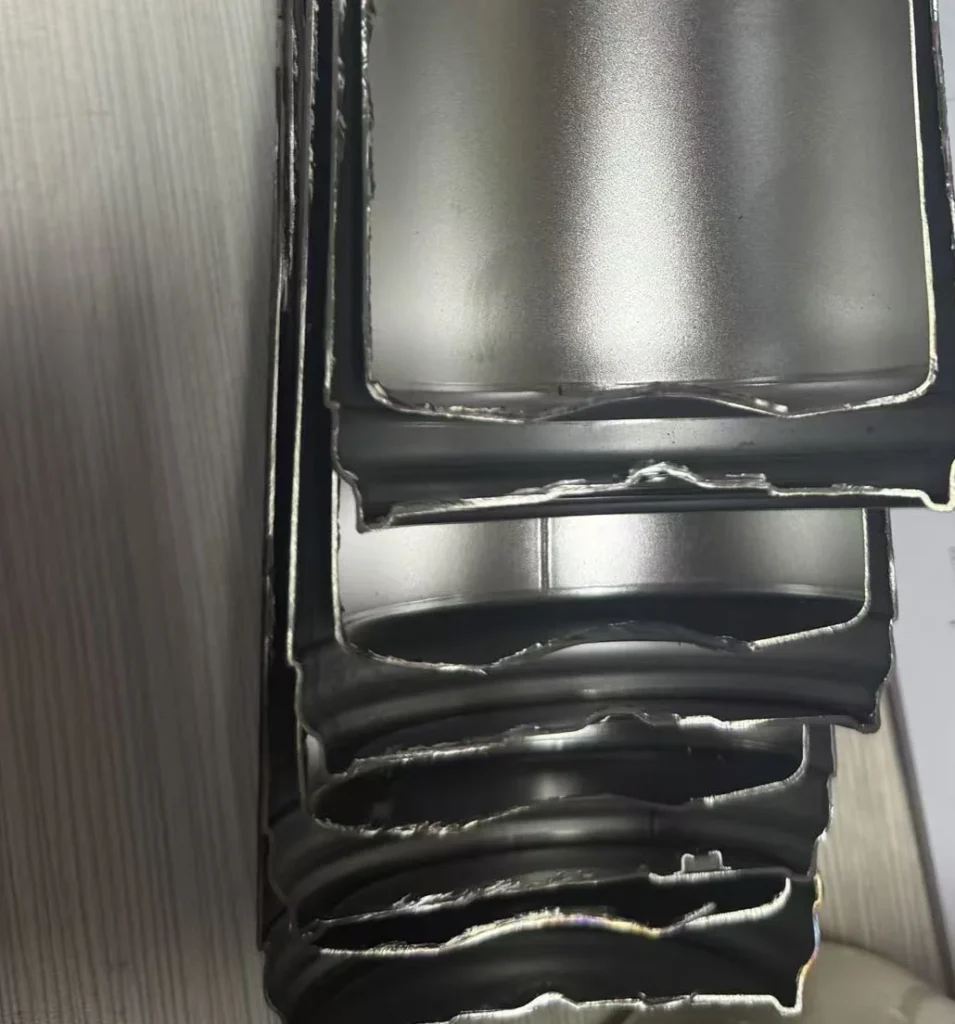
The cavity between them contains very little gas compared with normal atmospheric air.
It is not a mathematically perfect vacuum, but it is sufficiently low in pressure to greatly reduce heat transfer through the gas.
Double Wall Does Not Automatically Mean Vacuum Insulated
These two terms are sometimes treated as if they mean the same thing.
They do not.
A cup can have two walls with ordinary air trapped between them.
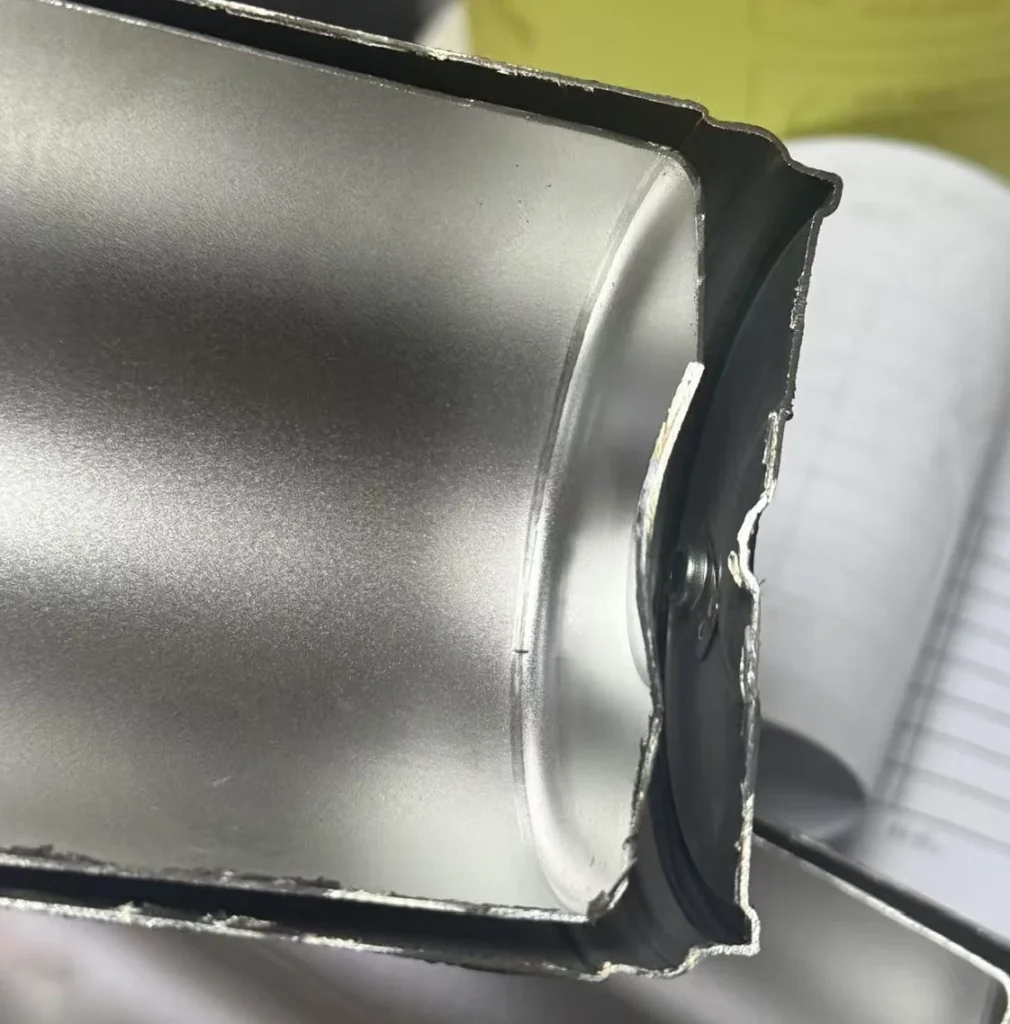
That air gap can provide some insulation, but air can still conduct heat and circulate through convection.
In a vacuum-insulated product, most of the air is removed from the cavity.
That is the important difference.
So when comparing products, double wall describes the construction, while double-wall vacuum insulated tells us something more specific about what exists between those walls. In vacuum-insulated construction, most of the air is removed from the space between the two stainless steel walls.
Why the Lid and Cup Opening Matter
The sidewall may have excellent vacuum insulation, but the top of the tumbler is a different story.
The mouth interrupts the large insulated sidewall area, and most ordinary tumbler lids do not contain the same vacuum cavity as the stainless steel body.
Heat can still move through:
- The opening
- Lid material
- Drinking ports
- Straw openings
- Air vents
- Gaskets
- Structural connections around the neck
This is why two tumblers using similar vacuum bodies can still perform differently if their lids are different.
A wide-mouth tumbler with a thin drinking lid should not automatically be expected to perform like a narrow-neck vacuum bottle with a more heavily insulated stopper.
The lid is therefore part of the thermal system, not just an accessory.
This is also why lid selection matters when developing a custom tumbler. For more detail, see Tumbler Lid Types Compared: Leak Resistance, Cleaning, Cost & Best Uses.
The Same Vacuum Works for Hot and Cold Drinks
A vacuum tumbler does not use one technology for hot drinks and another for cold drinks.
The same principle works in both directions.
With a hot drink, the design slows heat moving out of the beverage.
With a cold drink, it slows heat moving into the beverage from the warmer surroundings.
The direction changes, but the heat-transfer mechanisms are the same.
That is why the same double-wall vacuum structure can be used for both hot coffee and iced water.
Why Two Vacuum Tumblers Can Have Different Thermal Performance
Two products may both be described as “double-wall vacuum insulated” and still produce different test results.
That does not necessarily mean one of them is falsely described.
Several other factors matter.
Vacuum Integrity
The low-pressure cavity must stay sealed.
If air enters the space between the walls, conduction through the gas and convection can increase significantly.
Cup Geometry
Capacity, surface area, mouth diameter and neck design influence heat transfer.
A narrow-mouth bottle and a wide-mouth tumbler should not automatically be expected to perform identically.
Lid Design
The lid may provide a much easier heat-transfer path than the sidewall.
Thermal Bridges
Where the inner and outer structures physically connect, solid material can conduct heat.
Radiant Heat Control
The surface properties facing the vacuum cavity can influence how much thermal radiation is transferred.
Manufacturing Consistency
Good design alone is not enough.
Vacuum creation, sealing and assembly need to remain consistent from one piece to the next.
This is why thermal performance should be treated as both a design issue and a production-quality issue.
Does 316 Stainless Steel Insulate Better Than 304?
Not automatically.
304 and 316 stainless steel are usually compared because of differences in corrosion resistance, material specification and cost.
The steel grades do have somewhat different physical properties, but simply changing a tumbler from 304 to 316 does not guarantee noticeably better temperature retention.
In an actual vacuum tumbler, factors such as:
- Vacuum integrity
- Lid design
- Mouth opening
- Product geometry
- Thermal bridges
usually have a much larger influence on overall performance than the grade number printed on the stainless steel.
A well-designed 304 vacuum tumbler can therefore outperform a poorly constructed 316 product.
For a more detailed material comparison, see 304 vs 316 Stainless Steel for Water Bottles: Which Is Better?
How Is the Vacuum Created During Manufacturing?
The exact equipment and process can vary between factories, but the principle is similar.
The stainless steel inner vessel and outer shell are first formed and joined to create a sealed double-wall structure with a cavity between them.
Air then needs to be removed from that cavity.
In industrial production, this may involve vacuum pumping in a vacuum furnace or other controlled vacuum equipment.
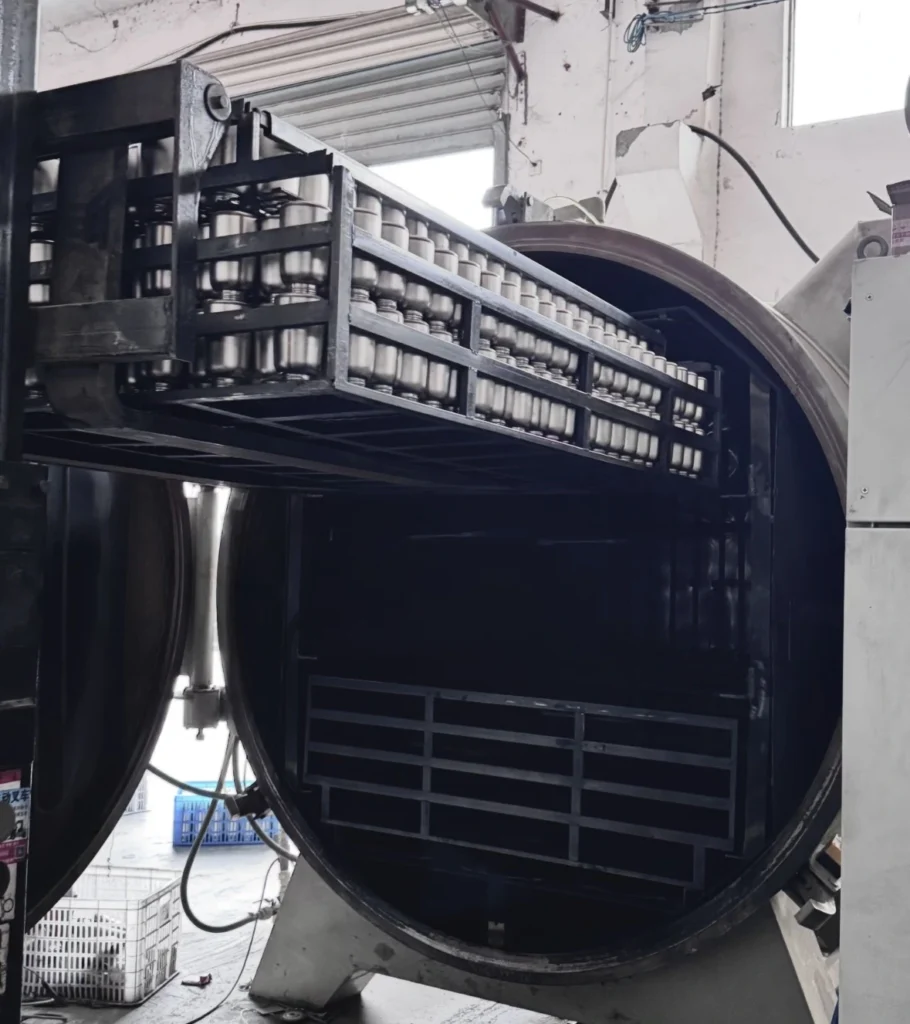
Once the required low-pressure condition has been reached, the evacuation point is sealed so that the cavity can maintain the vacuum.
This pumping-and-sealing stage is a critical part of making a true vacuum-insulated stainless steel product. This pumping-and-sealing stage is a critical part of making a true vacuum-insulated stainless steel product.
The exact equipment, temperature, sealing method and process parameters can vary by manufacturer and product.
For that reason, it would be inaccurate to say that every vacuum tumbler is manufactured using exactly the same process.
What Happens When a Tumbler Loses Its Vacuum?
If the vacuum seal fails, more air can enter the space between the two stainless steel walls.
That gives heat additional paths through gas conduction and convection.
Thermal performance can drop significantly.
One possible sign is that the main stainless steel sidewall starts to feel much warmer with a hot drink or much colder with an iced drink than it normally would.
Condensation may also appear on the main sidewall during cold use.
However, condensation around the lid or neck alone does not automatically mean the vacuum has failed.
Those areas have different structures and thermal paths from the vacuum-insulated body.
The important distinction is between normal temperature exchange around openings and an unusual change across the main insulated wall.
Why Preheating or Precooling Can Improve Real-World Performance
The stainless steel inner wall itself has thermal mass.
If very hot coffee is poured into a cool tumbler, some of the drink’s energy immediately warms the inside of the cup.
Likewise, a warm tumbler absorbs some heat from a very cold beverage.
Preheating or precooling reduces this initial temperature difference.
For maximum thermal performance, the tumbler can be preheated with warm water or precooled with cold water for several minutes before adding the final beverage.
This does not improve the vacuum.
It simply reduces the amount of energy initially exchanged between the beverage and the tumbler itself.
How Should Insulation Performance Be Tested?
Statements such as:
“Keeps drinks hot for 12 hours”
only become meaningful when the test conditions are known.
Important variables include:
- Starting liquid temperature
- Fill volume
- Ambient temperature
- Test duration
- Lid configuration
- Frequency of opening
- Measurement method
A tumbler filled to the top with very hot water and kept closed in a controlled room will not necessarily produce the same result as a half-full tumbler repeatedly opened outdoors.
For OEM projects, it is better to agree on a defined test method and compare the approved sample and production units under the same conditions.
This is also why thermal performance belongs in a stainless steel tumbler quality check before mass production.
Vacuum Insulation Does Not Mean Zero Heat Transfer
This is the most important point to remember.
A vacuum-insulated tumbler is not a perfect thermal barrier.
Heat can still move through:
- The neck
- Metal connections
- The lid
- Drinking openings
- Gaskets
- Other components
- Thermal radiation
What the vacuum does extremely well is remove most of the gas from the largest cavity between the inner and outer walls.
That greatly reduces two major heat-transfer mechanisms across that space.
The rest of the product must then be designed to control the remaining paths.
Good insulation is therefore the result of the whole thermal system, not simply the existence of a vacuum gap.
FAQ
Is There Really No Air Inside a Vacuum Tumbler?
There is not literally zero gas.
The cavity is evacuated to a much lower pressure than normal atmospheric conditions.
With far fewer gas molecules present, conduction through the gas is greatly reduced and convection is effectively suppressed.
Does a Vacuum Tumbler “Keep Cold Inside”?
A more accurate explanation is that it slows heat from the warmer environment moving into the colder beverage.
Cold itself is not a form of energy that leaks out.
Is Double Wall the Same as Vacuum Insulated?
No.
A double-wall cup may simply contain an air gap.
A vacuum-insulated tumbler removes most of the gas from that cavity, providing a much stronger thermal barrier.
Does Thicker Stainless Steel Always Mean Better Insulation?
No.
Steel thickness can affect strength and thermal mass, but vacuum integrity, geometry, lid design and thermal bridges are often more important to overall insulation.
A heavier tumbler is not automatically a better-insulated tumbler.
Does 316 Stainless Steel Keep Drinks Hot Longer Than 304?
Not automatically.
316 is usually chosen for different corrosion-resistance requirements. The overall vacuum construction and lid design play a much larger role in thermal performance.
Why Is There Condensation Near My Lid?
The lid and neck do not necessarily have the same insulation as the vacuum sidewall.
Some condensation near these areas can occur without indicating vacuum failure.
Can a Vacuum Tumbler Lose Its Insulation?
Yes.
If the evacuated cavity loses its seal and air enters between the walls, heat transfer can increase and thermal performance can decline.
Final Thoughts
The science behind a vacuum-insulated tumbler is simple in principle but demanding in manufacturing.
Two stainless steel walls create the structure. Removing most of the air between them greatly reduces conduction through the gas and suppresses convection. Reflective surface treatments can help manage thermal radiation, while the lid, opening, neck and other structural connections determine how much heat still moves through the remaining paths.
That is why two tumblers carrying the same “double-wall vacuum insulated” description can still perform differently.
At Warmus, we look at thermal performance as a result of the complete product rather than one isolated feature.
Cup construction, vacuum integrity, lid design and production consistency all matter.
Understanding vacuum insulation in stainless steel tumblers also makes it easier to understand why thermal testing and production quality control are important.
A good vacuum tumbler is not simply two steel walls with the air removed.
It is a carefully controlled thermal system designed to slow every practical path available for heat transfer. If you are developing a vacuum-insulated tumbler project and need support with product structure, lid selection, materials or thermal performance requirements, you can contact our team to discuss the project.