
When sourcing stainless steel water bottles, one of the most common material questions buyers ask is whether 304 or 316 stainless steel is the better choice.
Both materials are widely used in stainless steel products, and both can provide excellent durability, corrosion resistance, and performance when manufactured correctly.
However, 316 stainless steel contains additional alloying elements that give it stronger corrosion resistance in certain environments. This also makes it more expensive.
For most reusable water bottles and insulated tumblers, 304 stainless steel is already an excellent choice. In some specialized applications, however, 316 stainless steel may provide additional benefits.
In this guide, we compare 304 vs 316 stainless steel for water bottles from a manufacturing and purchasing perspective, including composition, corrosion resistance, cost, taste, applications, and how buyers should choose the right material for an OEM project.
What Is 304 Stainless Steel?
304 stainless steel is one of the most commonly used stainless steel grades in consumer products, kitchenware, food-contact products, and reusable drinkware.
It is often referred to as 18/8 stainless steel, a common industry term referring broadly to its chromium and nickel content.
The material offers a good balance between:
- Corrosion resistance
- Mechanical strength
- Formability
- Welding performance
- Surface finishing capability
- Cost
These characteristics make 304 stainless steel particularly suitable for mass-produced stainless steel water bottles, tumblers, coffee mugs, travel mugs, and food containers.
For this reason, 304 stainless steel is widely used as the standard material for the inner and outer walls of vacuum-insulated drinkware.
What Is 316 Stainless Steel?
316 stainless steel is another high-quality stainless steel grade.
Compared with 304 stainless steel, 316 contains additional molybdenum.
This additional alloying element improves resistance to certain forms of corrosion, particularly in environments containing chlorides or salt.
Because of this, 316 stainless steel is commonly associated with more demanding environments such as:
- Marine environments
- Coastal environments
- Certain chemical applications
- Medical or laboratory equipment
- Products exposed to more corrosive substances
For drinkware, 316 stainless steel is sometimes used for the inner wall of premium bottles while the outer wall remains 304 stainless steel.
This structure can provide additional corrosion resistance where the liquid contacts the bottle while avoiding unnecessary material cost on the exterior.
304 vs 316 Stainless Steel: Quick Comparison
| Factor | 304 Stainless Steel | 316 Stainless Steel |
|---|---|---|
| Common use in drinkware | Very common | Premium / specialized applications |
| Corrosion resistance | Excellent for normal use | Higher in demanding environments |
| Salt / chloride resistance | Good | Better |
| Strength | Excellent | Excellent |
| Food and beverage use | Widely used | Widely used |
| Manufacturing difficulty | Standard | Similar, depending on design |
| Material cost | Lower | Higher |
| Suitable for most water bottles | Yes | Usually not necessary |
| Premium positioning | Good | Stronger premium selling point |
| Typical OEM choice | 304 inner + 304 outer | 316 inner + 304 outer |
Which One Has Better Corrosion Resistance?
When comparing 304 vs 316 stainless steel, corrosion resistance is one of the most important differences.
Both materials perform very well under normal drinking conditions.
For water, coffee, tea, and many common beverages, properly manufactured 304 stainless steel is generally sufficient.
316 stainless steel becomes more advantageous when the product may experience higher levels of salt, chlorides, or more corrosive environments.
This is why 316 stainless steel is often associated with marine or coastal applications.
However, stronger corrosion resistance does not automatically mean that every water bottle should use 316 stainless steel.
For most consumers, the additional performance may provide little practical benefit during normal daily use.
Is 316 Stainless Steel Safer Than 304?
Buyers sometimes assume that because 316 stainless steel is more expensive, it must automatically be safer.
This is not the correct way to compare these materials.
Both 304 and 316 stainless steel are widely used in products designed for food and beverage contact.
For water bottles, material grade is only one part of the overall product quality and safety.
Manufacturing quality also matters, including:
- Raw material quality
- Welding quality
- Surface cleanliness
- Polishing process
- Production hygiene
- Lid and plastic material quality
- Testing and quality control
Therefore, a well-manufactured 304 stainless steel bottle can be a better finished product than a poorly manufactured bottle simply marketed as “316 stainless steel.”
For B2B buyers, the complete material specification and manufacturing process are more important than relying on a single material claim.
Does 316 Stainless Steel Make Water Taste Better?
In normal water bottle applications, consumers should not expect a major taste difference simply because a bottle uses 316 instead of 304 stainless steel.
Taste and odor can be influenced by many other factors, such as:
- Residue from manufacturing
- Cleaning before first use
- Beverages stored for long periods
- Lid and silicone components
- Improper drying after cleaning
For standard drinking water, coffee, and tea, both high-quality 304 and 316 stainless steel can provide an excellent user experience.
What About Coffee, Tea, Sports Drinks and Other Beverages?
For brands developing drinkware, the intended beverage is an important consideration.
Water
For standard reusable water bottles, 304 stainless steel is normally sufficient.
Coffee and Tea
304 stainless steel is widely used for insulated coffee mugs and tea bottles.
The product design, lid structure, insulation performance, coating quality, and cleaning experience are usually more important purchasing considerations than simply upgrading from 304 to 316.
Sports and Electrolyte Drinks
For brands targeting sports or fitness markets, it can be useful to consider the expected beverage composition, cleaning habits, and how long liquids may remain inside the bottle.
In most normal applications, 304 remains widely suitable.
For more demanding applications or specific beverage requirements, a 316 inner wall can be considered.
Does 316 Stainless Steel Keep Drinks Hot or Cold Longer?
Not necessarily.
This is a common misunderstanding when comparing 304 vs 316 stainless steel for water bottles.
The insulation performance of a vacuum bottle mainly depends on the complete vacuum structure and manufacturing quality rather than whether the stainless steel is 304 or 316.
Important factors include:
- Vacuum quality
- Double-wall structure
- Wall thickness and design
- Welding quality
- Lid insulation and sealing
- Bottle opening size
A 316 stainless steel bottle is therefore not automatically better at keeping beverages hot or cold.
A well-designed and properly manufactured 304 vacuum bottle may outperform a poorly designed bottle made with a more expensive stainless steel grade.
Why Is 316 Stainless Steel More Expensive?
316 stainless steel generally has a higher raw material cost because its alloy composition differs from 304, including the addition of molybdenum.
However, OEM buyers should understand that the finished bottle price difference is not equal to the raw stainless steel price difference.
A stainless steel bottle quotation includes much more than stainless steel material itself, such as:
- Stainless steel material
- Plastic lid
- Silicone components
- Welding
- Vacuum processing
- Polishing
- Surface coating
- Logo decoration
- Packaging
- Assembly
- Quality inspection
- Labor
- Production loss
This means changing from 304 to 316 does not increase the finished bottle price by one fixed percentage.
The actual difference depends on factors such as:
- Bottle size
- Inner-wall weight
- Stainless steel thickness
- Current raw material prices
- Order quantity
- Material availability
- Manufacturing yield
- Whether only the inner wall or the entire bottle is changed
For this reason, OEM buyers should ask manufacturers to calculate the cost based on the actual product specification rather than estimating the final price from stainless steel prices alone.
Why Order Quantity Matters When Choosing 316
Changing the stainless steel specification can affect more than the unit material cost.
For an OEM manufacturer, a different material specification may require separate raw material purchasing, production planning, inventory management, and material traceability.
For a small order, these additional requirements can make a special material specification less economical.
For a larger program, however, the additional material and setup costs can be distributed across more pieces.
This is why buyers should confirm both:
Material specification + MOQ
rather than discussing the stainless steel grade alone.
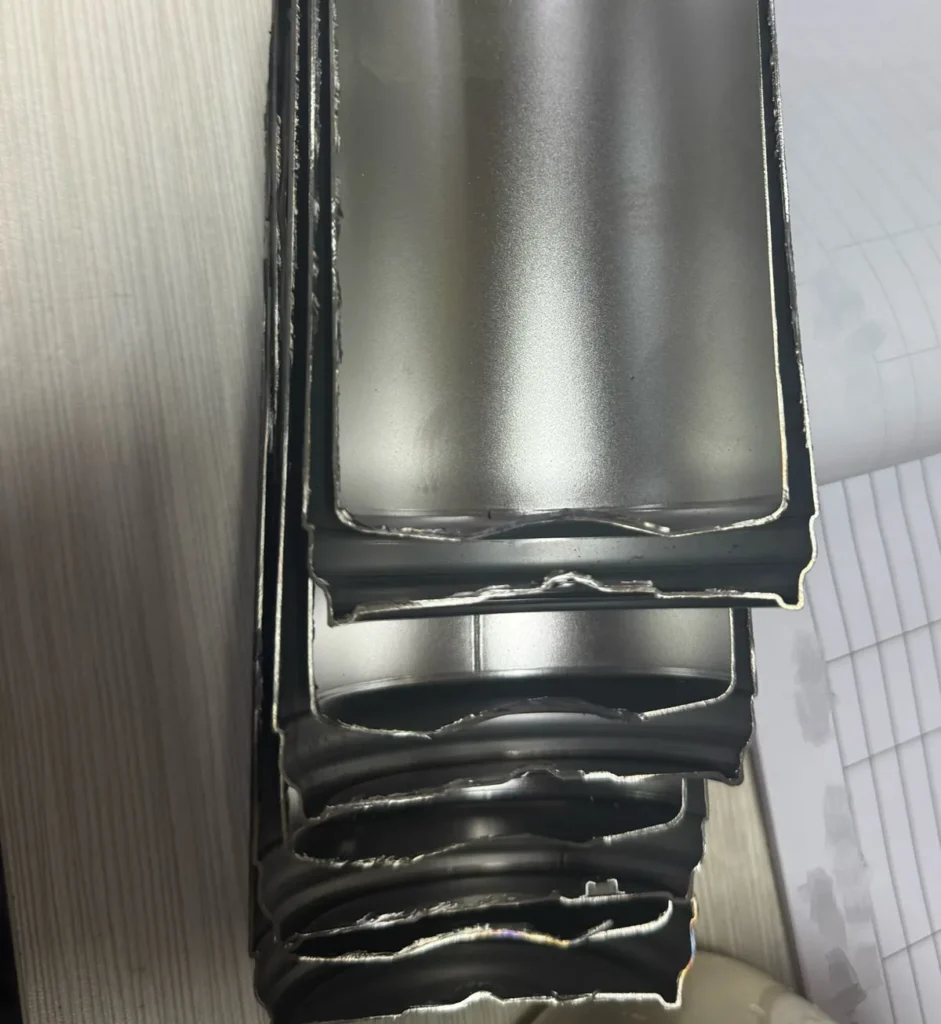
316 Inner Wall + 304 Outer Wall: A Practical Premium Option
For brands that want to offer a premium material specification, one practical solution is:
316 stainless steel inner wall + 304 stainless steel outer wall
The inner wall is the part that directly contacts the beverage.
Using 316 stainless steel in this area provides the additional corrosion-resistance benefit where it is most relevant.
The outer wall does not normally contact the beverage, so 304 stainless steel can usually provide sufficient performance for this part of the bottle.
The outer wall mainly provides:
- Bottle structure
- The outer part of the vacuum-insulated construction
- Exterior appearance
- A surface for powder coating or spray painting
- A surface for logo decoration
This combination can help balance:
Product performance + premium positioning + material cost
For some OEM projects, this can make more commercial sense than manufacturing the entire bottle from 316 stainless steel.
When Does 316 Inner + 304 Outer Make Sense?
This construction may be worth considering when:
- The brand wants a higher material specification
- The product is positioned in a premium price segment
- The intended application may benefit from additional corrosion resistance
- “316 stainless steel inner wall” supports the product’s marketing position
- The buyer wants to control cost rather than changing the entire bottle to 316
However, not every existing bottle model can necessarily be changed to a different stainless steel specification without considering production conditions.
OEM buyers should confirm feasibility, MOQ, cost, sampling requirements, and production lead time with the manufacturer before finalizing the specification.
Is 316 Stainless Steel Always Better for Premium Brands?
Not necessarily.
Material specification is only one part of premium product positioning.
For many consumers, other product details can have a greater influence on the final experience, including:
- Lid function
- Leak resistance
- Drinking experience
- Insulation performance
- Surface coating
- Scratch resistance
- Product weight
- Logo quality
- Packaging
- Overall workmanship
A premium brand should therefore evaluate the complete product rather than relying on “316 stainless steel” as the main selling point.
In many cases, investing the budget in better coating, improved lid design, stronger packaging, or stricter quality control may create more visible value for consumers.
How Can Buyers Verify 304 or 316 Stainless Steel?
This is an important question for OEM buyers.
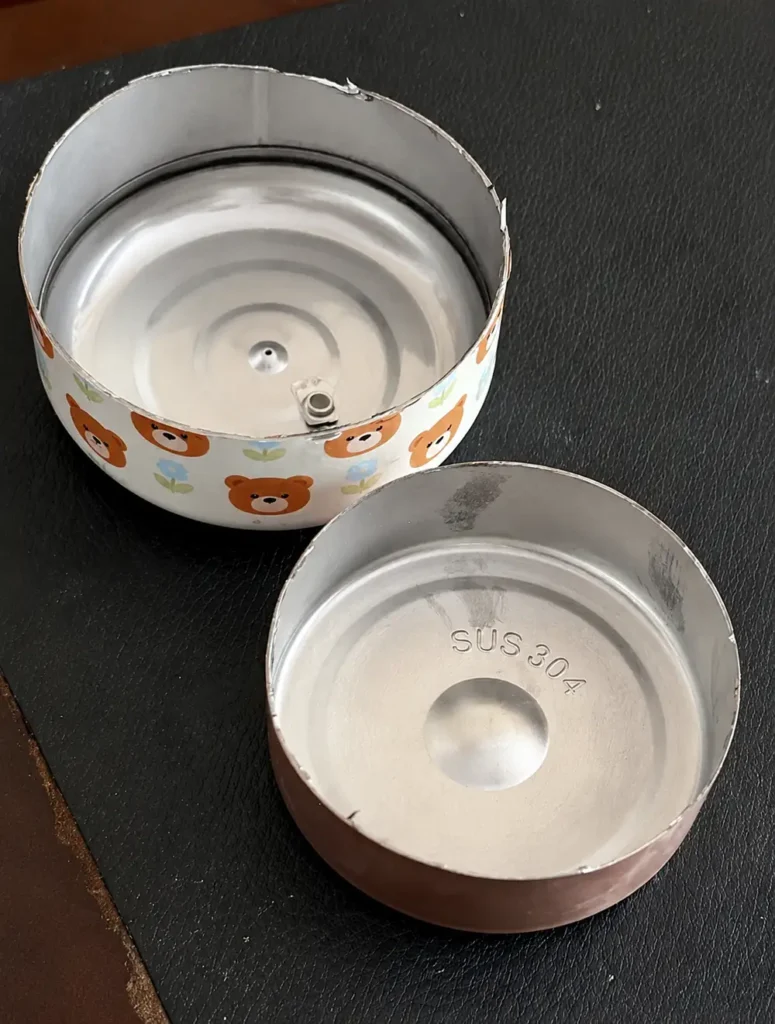
From appearance alone, buyers cannot reliably determine whether a stainless steel component is 304 or 316.
If material grade is an important part of the purchase specification, several verification methods can be considered.
1. Clearly Specify the Material
The required stainless steel grade should be clearly stated in:
- Quotations
- Purchase orders
- Product specifications
- Approved samples
- Production documents
This creates a clear reference for both the buyer and manufacturer.
2. Request Material Documentation
For important projects, buyers can ask the supplier for relevant material documentation or raw-material information.
Documentation is useful for traceability, particularly when the material specification forms an important part of the product claim.
3. Use PMI or XRF Material Testing
Positive Material Identification, or PMI, can be used to identify alloy composition.
Handheld XRF equipment is commonly used for non-destructive alloy identification.
When distinguishing 304 and 316 stainless steel, the presence of molybdenum is particularly useful because 316 contains molybdenum while standard 304 does not.
For larger projects where the stainless steel grade is commercially important, buyers can include material verification in their inspection requirements.
4. Use Third-Party Testing When Necessary
For projects requiring more formal confirmation, samples can be sent to an appropriate third-party laboratory for material analysis.
The testing method should match the specific verification requirements of the project.
Why a Simple “Stainless Steel Test” May Not Be Enough
OEM buyers sometimes receive a simple statement that a product has “passed a stainless steel test.”
But the important question is not only:
“Is this stainless steel?”
It is:
“Does the material composition match the stainless steel grade specified in the order?”
If a project requires 316 stainless steel, the verification method should be capable of distinguishing 316 from 304 rather than simply confirming that the product is made of stainless steel.
This is especially important when the material grade is part of the product’s premium positioning or contractual specification.
Which Material Should Your Brand Choose?
The right material depends on the product positioning, usage environment, target price, quantity, and customer expectations.
| Buyer Requirement | Recommended Starting Point |
| Standard reusable water bottle | 304 |
| Coffee tumbler | 304 |
| Travel mug | 304 |
| Sports bottle | 304 in most cases |
| Outdoor bottle | 304 in most cases |
| Premium drinkware | 304 or 316 inner wall |
| More demanding corrosion conditions | Consider 316 |
| Premium material positioning | 316 inner + 304 outer |
| Cost-sensitive project | 304 |
| Large-volume retail program | 304 usually offers strong value |
| Material grade is a critical requirement | Add material verification |
These recommendations are starting points rather than fixed rules.
The final specification should always be evaluated according to the actual product and target market.
6 Questions Buyers Should Ask Before Choosing 304 or 316
1. What Will Consumers Put Inside the Bottle?
Water, coffee, tea, sports drinks, or other beverages may create different product requirements.
2. Where Will the Bottle Be Used?
Normal home and office use is different from coastal, marine, or more demanding corrosive environments.
3. What Is the Target Retail Price?
If the product must meet a competitive retail price, 304 stainless steel may provide a better balance between performance and cost.
4. Does the Brand Need a Premium Material Selling Point?
For some premium product lines, a 316 inner wall can support the product’s material story.
5. What Is the Expected Order Quantity?
Special material specifications can affect raw material sourcing, MOQ, production planning, and cost.
6. How Important Is Material Verification?
If stainless steel grade is an important contractual or marketing specification, include it clearly in the product documents and consider appropriate material verification.
304 vs 316 Stainless Steel: Which Is Better for Water Bottles?
For most stainless steel water bottles, 304 stainless steel provides an excellent balance of corrosion resistance, durability, manufacturability, and cost.
This is why it remains one of the most widely used materials in reusable drinkware manufacturing.
316 stainless steel provides stronger corrosion resistance, especially in more demanding environments.
However, that additional performance also comes with a higher material cost.
For many premium OEM projects, 316 inner wall + 304 outer wall can be a practical option when the brand wants additional material performance without unnecessarily increasing the cost of the entire bottle.
The best material is therefore not simply the one with the higher grade.
It is the material that best matches the product’s:
- Intended use
- Target market
- Brand positioning
- Expected quantity
- Target price
- Required verification level
FAQ
Is 316 Stainless Steel Better Than 304 for Water Bottles?
316 stainless steel offers stronger corrosion resistance, particularly in environments containing higher levels of chlorides or salt. However, for normal water bottle use, 304 stainless steel is already an excellent and widely used choice.
Is 304 Stainless Steel Suitable for Drinking Water?
Yes. High-quality 304 stainless steel is widely used in reusable water bottles, insulated tumblers, kitchenware, and other food-contact products.
Does 316 Stainless Steel Improve Insulation?
Not automatically. Vacuum insulation performance depends much more on bottle structure, vacuum quality, welding, wall thickness, and lid design than on whether the stainless steel is 304 or 316.
Why Is 316 Stainless Steel More Expensive?
316 contains a different alloy composition, including molybdenum, which improves corrosion resistance and also contributes to a higher raw material cost.
Can a Water Bottle Use 316 Inside and 304 Outside?
Yes. This can be a practical option for premium drinkware because the inner wall receives the additional corrosion-resistance benefit while the 304 outer wall helps control overall cost.
How Can Buyers Check Whether a Bottle Is Really 304 or 316?
For projects where material grade is important, buyers can combine clear material specifications and documentation with PMI, XRF, or appropriate third-party material analysis. The testing method should be suitable for distinguishing the required stainless steel grade.
Final Thoughts
The 304 vs 316 stainless steel decision should be based on the actual requirements of the water bottle rather than simply assuming that the more expensive material is always better.
For most reusable stainless steel water bottles, 304 stainless steel already provides an excellent combination of durability, corrosion resistance, manufacturing efficiency, and cost.
For projects requiring greater corrosion resistance or stronger premium material positioning, 316 stainless steel—particularly a 316 inner wall + 304 outer wall construction—can be considered.
For B2B buyers, material selection should also include supplier verification.
A material specification written on a quotation is important, but for projects where stainless steel grade is commercially critical, documentation, material traceability, and appropriate testing can provide stronger confirmation.
At Warmus, we support OEM and ODM stainless steel drinkware projects with different material specifications, surface finishes, colors, logo applications, and packaging options.
If you are deciding between 304 and 316 stainless steel for a new water bottle project, you can share your product design, target market, expected quantity, intended use, and price positioning with us.
Our team can evaluate the complete product requirements and recommend a practical material configuration rather than simply choosing the highest stainless steel grade.