
When developing custom drinkware, choosing the right surface finish is about much more than selecting a color.
Powder coating vs spray painting for stainless steel tumblers is a common decision for brands, retailers, wholesalers, and importers because the finish affects the tumbler’s durability, appearance, hand feel, logo compatibility, production cost, and overall brand positioning.
Powder coating is often preferred for its durable, matte, and textured finish, while spray painting provides more flexibility for smooth, glossy, metallic, pearl, and decorative effects.
So, which one is better?
The answer depends on your product.
For outdoor or sports drinkware, powder coating is often an excellent choice. For lifestyle products that require a smooth or highly decorative appearance, spray painting may offer more flexibility.
In this guide, we compare powder coating vs spray painting for stainless steel tumblers from a manufacturer’s perspective and explain what buyers should consider before choosing a surface finish for an OEM or private-label project.
Powder Coating vs Spray Painting: Quick Comparison
Before looking at each process in detail, here is a simple comparison:
| Factor | Powder Coating | Spray Painting |
|---|---|---|
| Surface feel | Usually matte or textured | Usually smoother |
| Scratch resistance | Generally very good | Depends on paint system |
| Outdoor / sports products | Excellent choice | Suitable |
| Matte finish | Excellent | Available |
| High-gloss finish | Limited options | Excellent |
| Metallic / pearl effects | Possible with special powders | More flexible |
| Gradient colors | Possible with special processes | Often more flexible |
| Pantone color matching | Available | Available |
| Laser engraving | Excellent compatibility | Possible depending on coating |
| Full-color decoration | Compatible with selected processes | Compatible with selected processes |
| Mass-production consistency | Good with proper process control | Good with proper process control |
These are general characteristics rather than absolute rules.
The final performance of either finish depends on the coating material, stainless steel surface preparation, application process, curing conditions, production environment, and quality control.
What Is Powder Coating?
Powder coating is a dry finishing process commonly used on stainless steel tumblers, water bottles, travel mugs, and sports bottles.
Instead of using liquid paint, fine powder particles are electrostatically applied to the prepared stainless steel surface.
The coated tumbler then passes through a curing process where heat allows the powder to melt, flow, and form a continuous coating.
The result is usually a relatively durable surface with a distinctive hand feel.
Depending on the powder formulation and product requirements, manufacturers can create different surface effects, including:
- Matte finishes
- Fine textures
- Coarse textures
- Low-gloss surfaces
- Soft-touch or tactile appearances
This makes powder coating particularly popular for outdoor, sports, fitness, travel, and everyday drinkware.
How Does a Powder-Coated Tumbler Feel?
One of the easiest ways to recognize powder coating is by touch.
Compared with a very smooth painted surface, many powder-coated tumblers have a slightly textured or tactile feeling.
This type of surface can give the product a stronger outdoor or performance-oriented appearance while also providing a comfortable grip.
However, not every powder coating feels the same.
Different powder formulations, textures, coating thicknesses, and curing processes can create noticeably different results.
For brands developing a specific tactile experience, approving a physical sample before mass production is important.
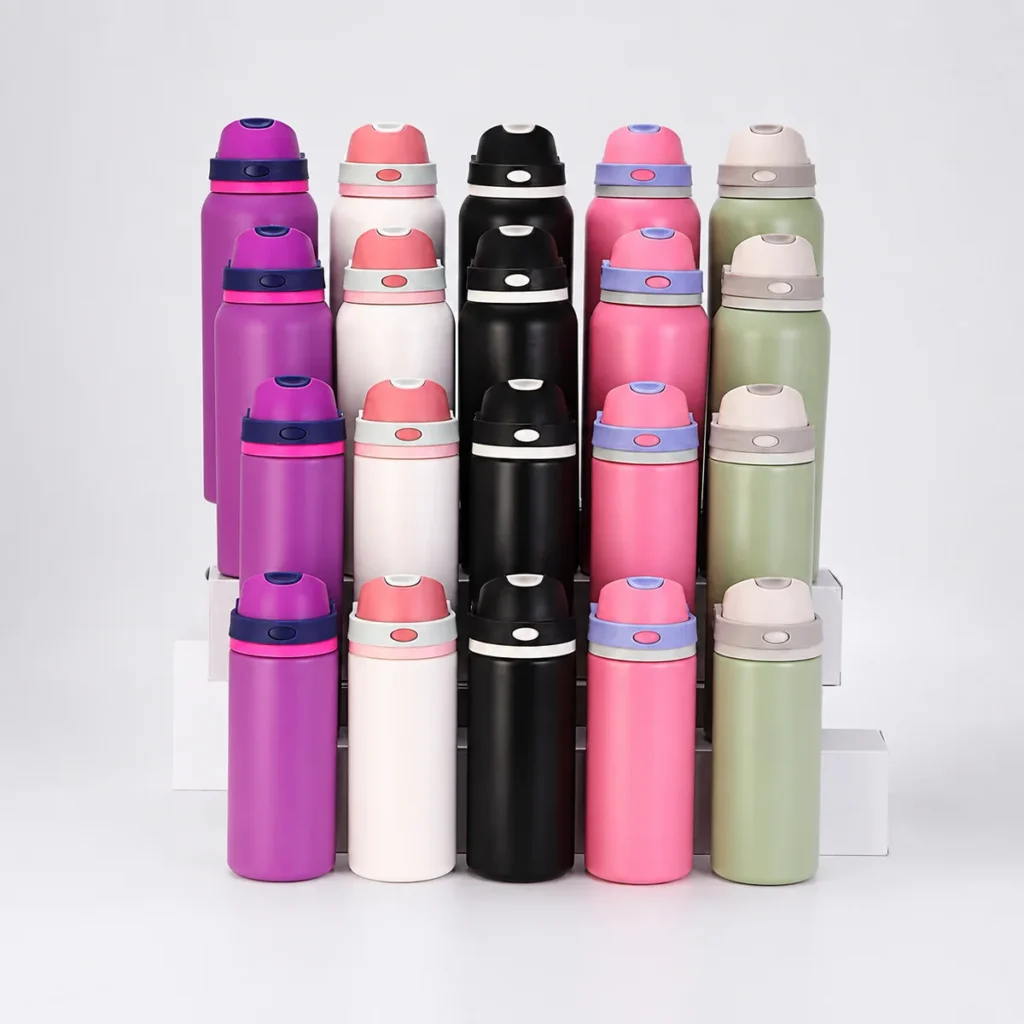
What Is Spray Painting?
Spray painting uses liquid coating rather than dry powder.
The coating is sprayed evenly onto the prepared stainless steel surface and then dried or cured according to the paint system being used.
Spray painting is particularly useful when the product requires a very smooth surface or a visual effect that may be more difficult to achieve with standard powder coating.
Common applications can include:
- Smooth matte colors
- Glossy finishes
- Metallic effects
- Pearl effects
- Translucent finishes
- Certain gradient designs
- Decorative fashion colors
Because of this flexibility, spray painting is often used for lifestyle drinkware, retail collections, gift products, fashion-oriented tumblers, and products where visual appearance is a major part of the design.
Which Finish Is More Durable?
Durability is one of the most important considerations when comparing powder coating vs spray painting for stainless steel tumblers.
For many everyday stainless steel tumbler applications, powder coating generally offers strong resistance to normal handling, friction, and scratching.
This is one reason it is widely used on sports bottles, outdoor drinkware, large-capacity tumblers, and reusable bottles designed for frequent daily use.
However, specifying “powder coating” alone does not guarantee good durability.
The entire manufacturing process matters.
Before coating, the stainless steel surface must be properly cleaned and prepared. Oil, polishing residue, dust, or contamination can reduce coating adhesion.
The coating must also be applied evenly and cured under suitable conditions.
If surface preparation or curing is poorly controlled, even a good powder material may not perform as expected.
The same principle applies to spray painting.
A properly prepared and correctly cured spray-painted tumbler can perform very well, while a poorly processed coating can scratch, chip, or peel more easily.
For buyers, the more useful question is therefore not simply:
“Is powder coating more durable than spray painting?”
It is also:
“How is the complete coating process controlled during production?”
This becomes particularly important for larger OEM orders where coating consistency must be maintained across thousands of pieces.
Scratch Resistance in Everyday Use
Stainless steel tumblers are frequently placed in backpacks, cup holders, office bags, cars, kitchens, gyms, and outdoor environments.
The surface will naturally experience repeated contact and friction.
If scratch resistance is one of the main product requirements, powder coating is often a good starting point.
Textured or matte powder-coated finishes can also make some minor surface marks less visually noticeable than highly reflective finishes.
By comparison, a glossy painted surface may show scratches, fingerprints, or small cosmetic imperfections more clearly because light reflects directly from the smooth surface.
That does not mean spray painting is unsuitable for everyday products.
It simply means that appearance and durability should be considered together.
For example:
An outdoor bottle designed for hiking and camping may benefit from a durable textured powder coating.
A premium lifestyle tumbler designed primarily around color, fashion, and shelf appearance may justify a smoother spray-painted finish.
The correct finish depends on how the final customer will actually use the product.
Appearance and Hand Feel
Durability is only part of the decision.
For many drinkware brands, the appearance of the tumbler on a retail shelf, website, social media post, or product photograph is equally important.
Powder Coating
Powder coating is especially suitable when the brand wants a:
- Matte appearance
- Textured surface
- Practical outdoor feeling
- Minimalist look
- Comfortable tactile finish
It works particularly well with sports bottles, camping drinkware, gym bottles, travel bottles, large tumblers, and reusable everyday drinkware.
Powder coating can also create a strong visual contrast when combined with laser engraving.
Spray Painting
Spray painting is often selected when the product requires a smoother or more decorative appearance.
It provides more flexibility for finishes such as:
- High gloss
- Metallic colors
- Pearl effects
- Smooth premium surfaces
- Certain gradient effects
- Decorative lifestyle colors
For retail and fashion-oriented drinkware, these visual effects can help differentiate the product from conventional solid-color tumblers.
Therefore, the best surface treatment should follow the product’s brand positioning rather than simply choosing whichever coating appears more durable.
Can Powder Coating and Spray Painting Match Pantone Colors?
Yes.
Both powder coating and spray painting can normally be developed according to a specified Pantone color reference.
For custom drinkware projects, the buyer usually provides a Pantone number or physical reference sample.
The manufacturer then prepares a color sample for approval before mass production.
However, buyers should understand an important point:
The same Pantone reference can look slightly different on different surface finishes.
Several factors affect how we visually perceive color, including:
- Surface texture
- Gloss level
- Coating thickness
- Lighting conditions
- Coating formulation
- Underlying material
For example, a matte powder-coated tumbler and a glossy spray-painted tumbler based on the same target color may not appear completely identical.
For brands with strict corporate color requirements, approving a physical color sample is therefore more reliable than judging the color only from a computer or phone screen.
Why Sample Approval Is Important for Custom Colors
Color development is one area where small differences can become noticeable after mass production.
Before producing a large custom-color order, buyers should ideally confirm:
- Color
- Gloss level
- Surface texture
- Logo position
- Logo color
- Overall appearance
Once the sample has been approved, it can become an important reference for production inspection.
For repeat orders, keeping an approved physical sample can also make it easier to compare future production batches.
This is particularly useful for brands that need to maintain consistent product colors across several seasons or repeat purchase orders.
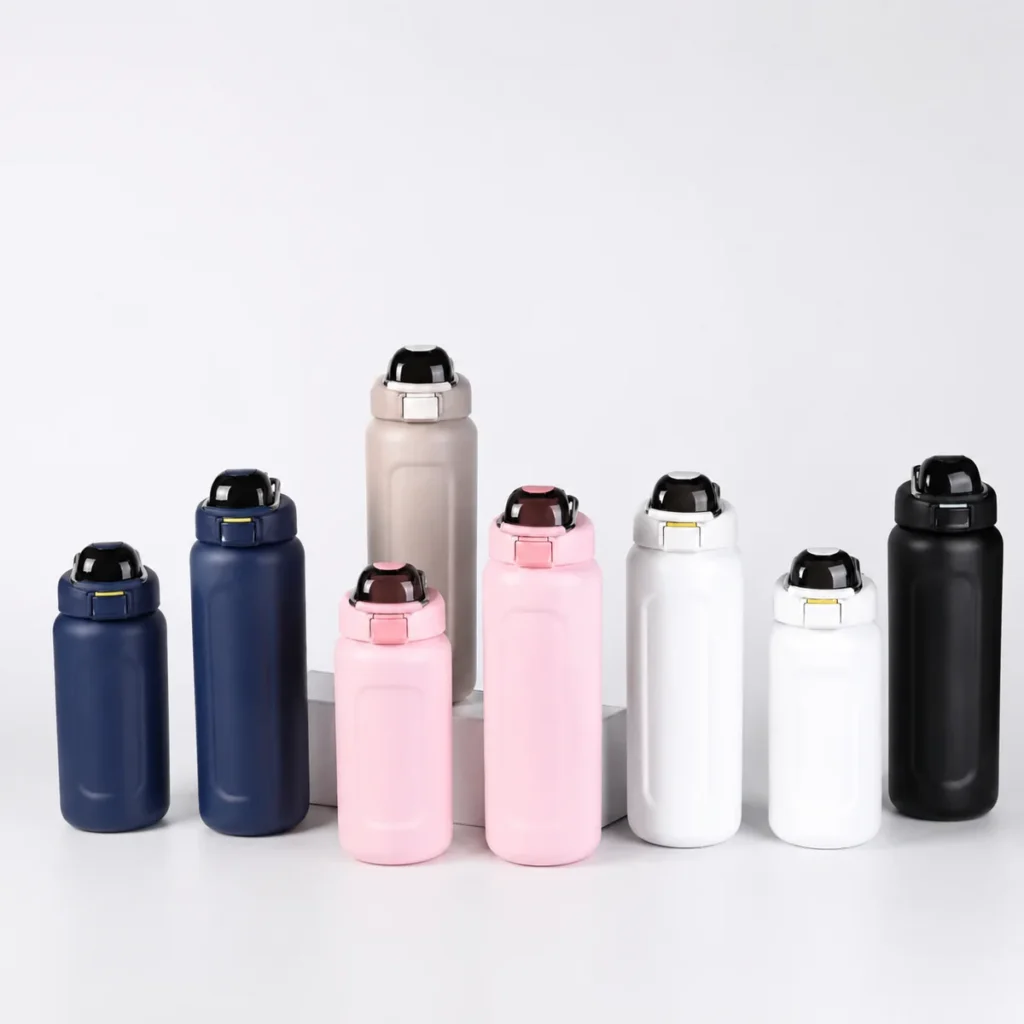
Powder Coating vs Spray Painting for Custom Logos
The tumbler surface finish should not be selected independently from the logo process.
A finish that works particularly well with one decoration method may require additional testing with another.
Laser Engraving on Powder-Coated Tumblers
Laser engraving works especially well on powder-coated stainless steel tumblers.
The laser removes the coating in the logo area and exposes the stainless steel underneath, creating a clean metallic contrast.
Because there is no printed ink in the engraved area, this combination is popular for:
- Outdoor drinkware
- Corporate gifts
- Sports bottles
- Minimalist branding
- Premium logo applications
A dark powder coating combined with stainless steel laser engraving can create a particularly strong visual contrast.
Screen Printing
Screen printing can be used on both powder-coated and spray-painted surfaces when the correct ink and production parameters are selected.
It is particularly suitable for simple logos, text, and graphics with a limited number of colors.
For larger quantities, screen printing can also be a cost-effective branding method.
UV Printing
UV printing is useful for colorful, detailed artwork and multi-color logos.
Because different coating surfaces can have different adhesion characteristics, sampling is important before mass production.
Heat Transfer Printing
Heat transfer can reproduce larger and more complex graphics, including multi-color designs and gradients.
Since heat is involved during the process, compatibility between the transfer process and the surface coating should be tested during sample development.
If you are still deciding how to apply your logo, you can also read our guide:
Best Logo Printing Methods for Custom Stainless Steel Tumblers
It compares laser engraving, screen printing, UV printing, heat transfer, and other common customization methods for branded drinkware.
Why Surface Preparation Matters
One factor buyers often overlook is what happens before the coating is applied.
In actual tumbler production, surface preparation can directly affect coating adhesion and final appearance.
Oil, dust, polishing residue, fingerprints, or other contamination on the stainless steel surface may lead to coating defects.
Proper preparation helps the coating bond more consistently to the tumbler body.
Production control is also important for reducing problems such as:
- Uneven color
- Dust or particles in the coating
- Surface contamination
- Poor adhesion
- Inconsistent texture
- Visible coating defects
This is why two tumblers described simply as “powder coated” can still have noticeably different quality.
For OEM buyers, the coating name alone does not tell the complete story.
The material, preparation, application, curing, and inspection process together determine the final result.
Why Curing Conditions Matter
After a coating is applied, it must be properly cured according to the requirements of the coating system.
Incorrect curing conditions can affect adhesion, hardness, color stability, and overall surface performance.
This is another reason buyers should avoid evaluating suppliers only by comparing coating names or unit prices.
Two factories may both quote “custom powder coating,” but their production control and final results may be very different.
When appearance or durability is important to your brand, physical sample evaluation is one of the most practical ways to confirm the expected standard before mass production.
Which Finish Is Cheaper?
There is no universal answer.
The cost of a tumbler finish depends on several variables:
- Coating material
- Color
- Surface effect
- Order quantity
- Product size
- Production difficulty
- Required quality level
- Number of colors in the order
A standard solid color produced in a large batch is very different from a small order requiring a specially developed metallic, pearl, or gradient finish.
This is especially important when comparing quotations from different manufacturers.
A lower unit price may reflect differences in coating material, surface preparation, coating thickness, production control, or quality requirements.
For this reason, buyers should compare product specifications and expected quality, not only the final FOB unit price.
Why Custom Colors Cost More on Small Orders
Custom color production requires preparation before the first finished tumbler is produced.
Depending on the coating process, manufacturers may need to:
- Prepare the coating material
- Set up production equipment
- Develop and confirm color samples
- Adjust the color before approval
- Clean equipment during color changes
- Restart and stabilize the production process
These setup costs are distributed across the total order quantity.
For example, the preparation cost may be relatively significant when divided among only a few hundred tumblers.
When the same preparation cost is spread across several thousand pieces, the additional cost per unit becomes much smaller.
This is one reason custom-color MOQ requirements and color surcharges are common in OEM stainless steel drinkware manufacturing.
For smaller projects, choosing an existing factory color may sometimes be more economical.
For larger orders, developing a custom Pantone color usually becomes more cost-efficient.
Why Too Many Colors Can Increase Production Complexity
Buyers sometimes look only at the total order quantity.
But the quantity per color is also important.
For example, producing 5,000 tumblers in one color is very different from producing 5,000 tumblers divided into ten colors.
Every color change may require preparation, cleaning, adjustment, and confirmation.
As the number of colors increases, production management becomes more complicated.
This can affect:
- Production efficiency
- Cost
- Lead time
- Color consistency
- Minimum quantity requirements
For brands planning a collection with many colors, discussing the color breakdown with the manufacturer early in the project can help avoid unnecessary costs later.
Mass Production Consistency
A beautiful prototype is important.
But for a commercial order, the more important question is:
Can the same appearance be maintained across hundreds or thousands of tumblers?
For both powder coating and spray painting, mass-production consistency depends on process control.
Factors that may influence the final appearance include:
- Coating batch
- Application thickness
- Curing conditions
- Production environment
- Color preparation
- Surface preparation
- Inspection standards
If one order contains several colors, each color should ideally have an approved reference sample.
Buyers with strict brand requirements should also communicate acceptable appearance standards before mass production rather than waiting until the order has already been completed.
Which Finish Should Your Brand Choose?
The best surface treatment depends on how the tumbler will be positioned and used.
| Buyer Requirement | Recommended Starting Point |
| Outdoor or camping bottle | Powder coating |
| Sports or gym bottle | Powder coating |
| Strong everyday scratch resistance | Powder coating |
| Matte textured hand feel | Powder coating |
| Minimalist laser-engraved logo | Powder coating |
| High-gloss surface | Spray painting |
| Smooth premium appearance | Spray painting |
| Metallic visual effect | Spray painting |
| Pearl finish | Spray painting |
| Decorative gradient | Spray painting |
| Fashion / lifestyle collection | Depends on design |
| Custom Pantone solid color | Either process |
| Full-color branding | Select coating together with printing method |
These recommendations are starting points rather than fixed rules.
A sports brand can still choose spray painting when appearance is the main priority.
Likewise, a premium lifestyle brand may choose a very fine powder coating because it prefers a soft matte texture.
There is no single surface finish that is best for every project.
The finish should support the overall product concept.
6 Questions to Ask Before Choosing a Tumbler Finish
Before confirming powder coating or spray painting for a custom tumbler project, consider these questions:
- Where will the tumbler be used?
Outdoor, sports, office, travel, retail, gifting, or everyday use? - Which is more important: durability or visual effect?
This can immediately narrow down the most suitable finishing options. - What type of surface do you want?
Matte, textured, smooth, glossy, metallic, pearl, or gradient? - What logo method will be used?
Laser engraving, screen printing, UV printing, heat transfer, or another decoration process? - What is the expected order quantity per color?
This can affect custom-color cost and MOQ. - How strict is your brand color requirement?
If color accuracy is important, a physical approval sample should be confirmed before production.
Answering these questions before sampling can reduce unnecessary revisions and help the manufacturer recommend a more suitable process.
Powder Coating vs Spray Painting for Stainless Steel Tumblers: Which Is Better?
So, which finish should you choose?
Powder coating is often the better starting point when durability, scratch resistance, tactile feel, outdoor positioning, or laser engraving are priorities.
Spray painting is often more suitable when the project requires a particularly smooth surface, high-gloss finish, metallic effect, pearl effect, or other decorative appearance.
But neither process is automatically better.
The right choice depends on:
- Product design
- Target customer
- Brand positioning
- Expected usage
- Color requirements
- Logo process
- Order quantity
- Budget
A good OEM drinkware project considers these factors together rather than treating the surface coating as an isolated decision.
FAQ
Is powder coating better than paint for stainless steel tumblers?
Powder coating is often preferred when durability, scratch resistance, and a matte or textured finish are priorities. Spray painting may be more suitable when the product requires a particularly smooth, glossy, metallic, pearl, or decorative appearance.
Does powder coating scratch?
Yes. No tumbler coating is completely scratch-proof. Powder coating generally provides good resistance to normal daily wear, but sufficiently strong impact, sharp objects, or repeated abrasion can still damage the surface.
Can stainless steel tumblers be matched to Pantone colors?
Yes. Both powder coating and spray painting can normally be developed according to Pantone color references. Because surface texture and gloss can influence how the color appears, a physical color sample should be approved before mass production when color accuracy is important.
Can you laser engrave a powder-coated tumbler?
Yes. Powder-coated stainless steel tumblers are particularly suitable for laser engraving. The laser removes the coating in the logo area and reveals the stainless steel underneath, creating a clean and durable metallic contrast.
Which finish is better for outdoor tumblers?
Powder coating is commonly used for outdoor and sports drinkware because it provides a durable surface and a practical matte or textured appearance. The final durability still depends on the coating formulation and manufacturing process.
Which finish is better for premium lifestyle tumblers?
It depends on the desired appearance. Spray painting can be an excellent option for smooth, glossy, metallic, pearl, or decorative finishes, while fine powder coatings can also create a premium matte appearance.
Can I use a custom Pantone color for a small tumbler order?
It may be possible, but custom colors usually involve additional setup, color development, and production preparation. This is why custom-color MOQ requirements or additional color costs are common for smaller orders. Selecting an existing color can sometimes be more economical.
Final Thoughts
When comparing powder coating vs spray painting, the right choice depends on the product’s durability requirements, appearance, branding method, and target market.
The surface finish affects how a stainless steel tumbler looks, feels, performs, accepts a logo, and represents the brand after it reaches the market.
Powder coating is often an excellent choice for durable, matte, textured, outdoor, and performance-oriented products.
Spray painting provides greater flexibility when smooth surfaces and decorative visual effects are the priority.
For a successful OEM project, the coating should be considered together with the tumbler design, Pantone color, logo method, packaging, target market, and order quantity.
At Warmus, we support OEM and ODM stainless steel drinkware projects with custom colors, surface finishes, logo applications, and packaging options.
If you are developing a custom stainless steel tumbler and are unsure which surface finish is more suitable, you can send us your product reference, Pantone color, logo artwork, expected quantity, and target market.
Our team can evaluate your requirements and recommend a suitable finishing solution for your project.